TALK: ROLANDAS KLIU?INSKAS · AV ARCHITECTS
February 2024 · Journal, Interni
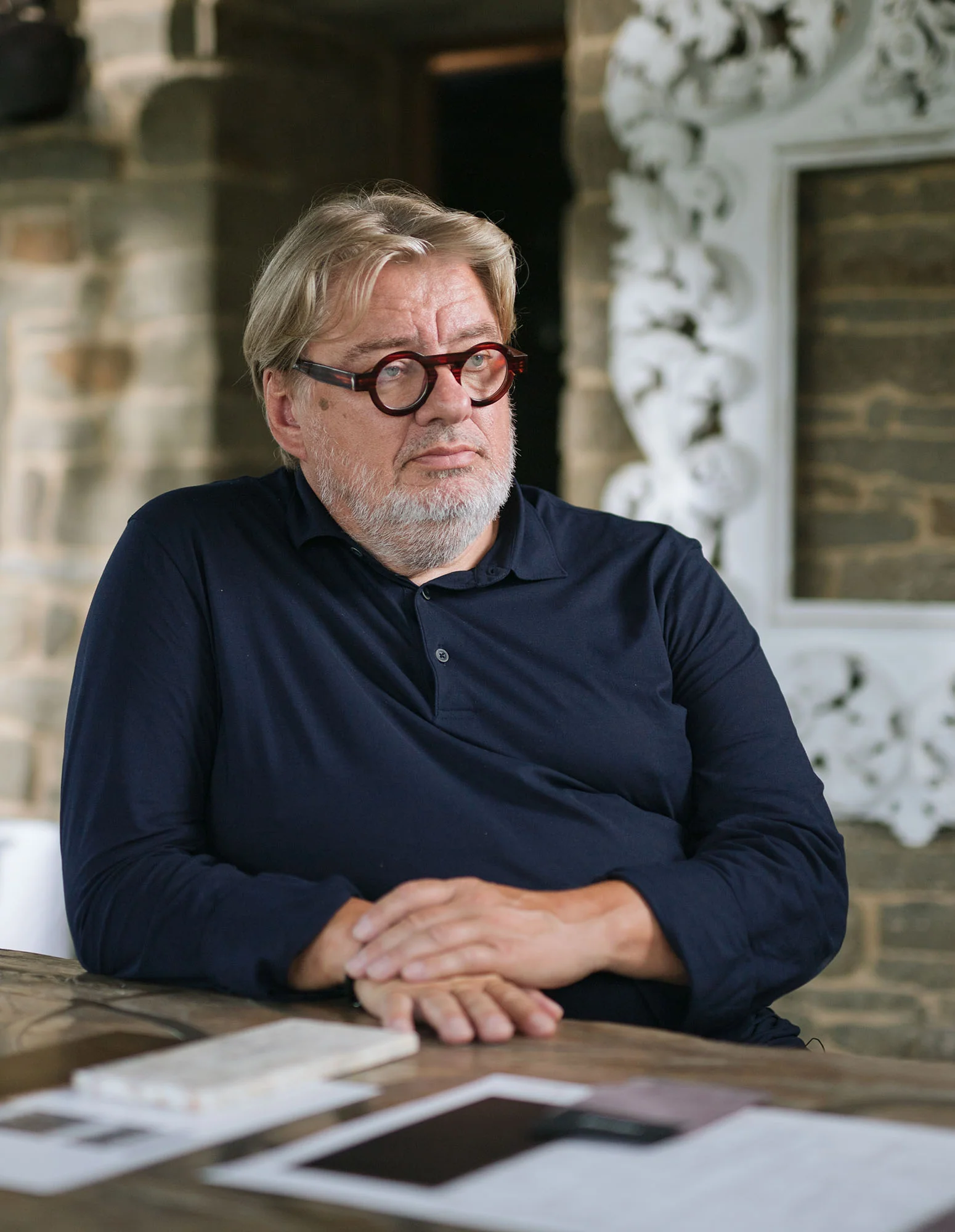
Here is how Rolandas Kliu?inskas defines himself and his idea of interior design.
TALK: ROLANDAS KLIU?INSKAS · AV ARCHITECTS
February 2024 · Journal, Interni
Here is how Rolandas Kliu?inskas defines himself and his idea of interior design.

The guiding theme in my work is always shaped by my clients' expectations and dreams, both explicit and implicit. These aspirations unlock a world of possibilities, breathing life into spaces and stories. This approach paves the way for diversity and the success of each project.

I'm currently working on projects in Almaty, Kazakhstan and Zermatt, Switzerland. The first involves reconstruction of a residential building for two clients, each featuring a completely different mood. I enjoy the challenges posed by each client's unique personality—always a source of inspiration and satisfaction. For instance, the Almaty projects, despite being in the same building, are strikingly different. Both projects have been carried out with the close support of Interni, featuring products from brands like Ceccotti, Edra, Henge, Giorgetti, Officine Gullo, Vasselletti, among others. Since both apartments share a facade of the same building, the glass facade's special "no border view" design has no industrial impact on the interiors. The chalet in Zermatt features a traditional English interior within the Swiss chalet style. It's unusual but deeply personal, reflecting the client's masculine personality with a hint of "XO".

Architecture and culture are interdependent and inseparable. Architecture forms part of each community's identity and embodies its cultural heritage. Since 2000, I've been working far from my native Lithuania, in both the EU and Asia. The diverse countries, continents, climates, seismic zones, cultures, historical heritages and family traditions I've encountered have added value to my projects. These differences impact functional planning, architecture, interiors, building construction, engineering, solutions, approaches to comfort, social status and more. It's challenging to neatly summarize such a broad topic.

My profession is inherently multidisciplinary. Between a project's inception and final implementation, there are numerous steps. Working with Interni is a crucial part of this process. Their ability to provide a professional selection of top Italian furnishings, materials, producers and craftspeople for creation, production, delivery and assembly is unparalleled. This is invaluable for my work. In each project, Interni's support begins at the early concept stage, helping to visualise the desired materials and technologies. At Interni's atelier, almost all information is accessible, including catalogues, samples and factory visits. When developing ideas for a project, a client's visit can refine the general style by experiencing the showroom firsthand—testing, touching and seeing the options. This is extremely important and saves time, ultimately resulting in the best outcome.


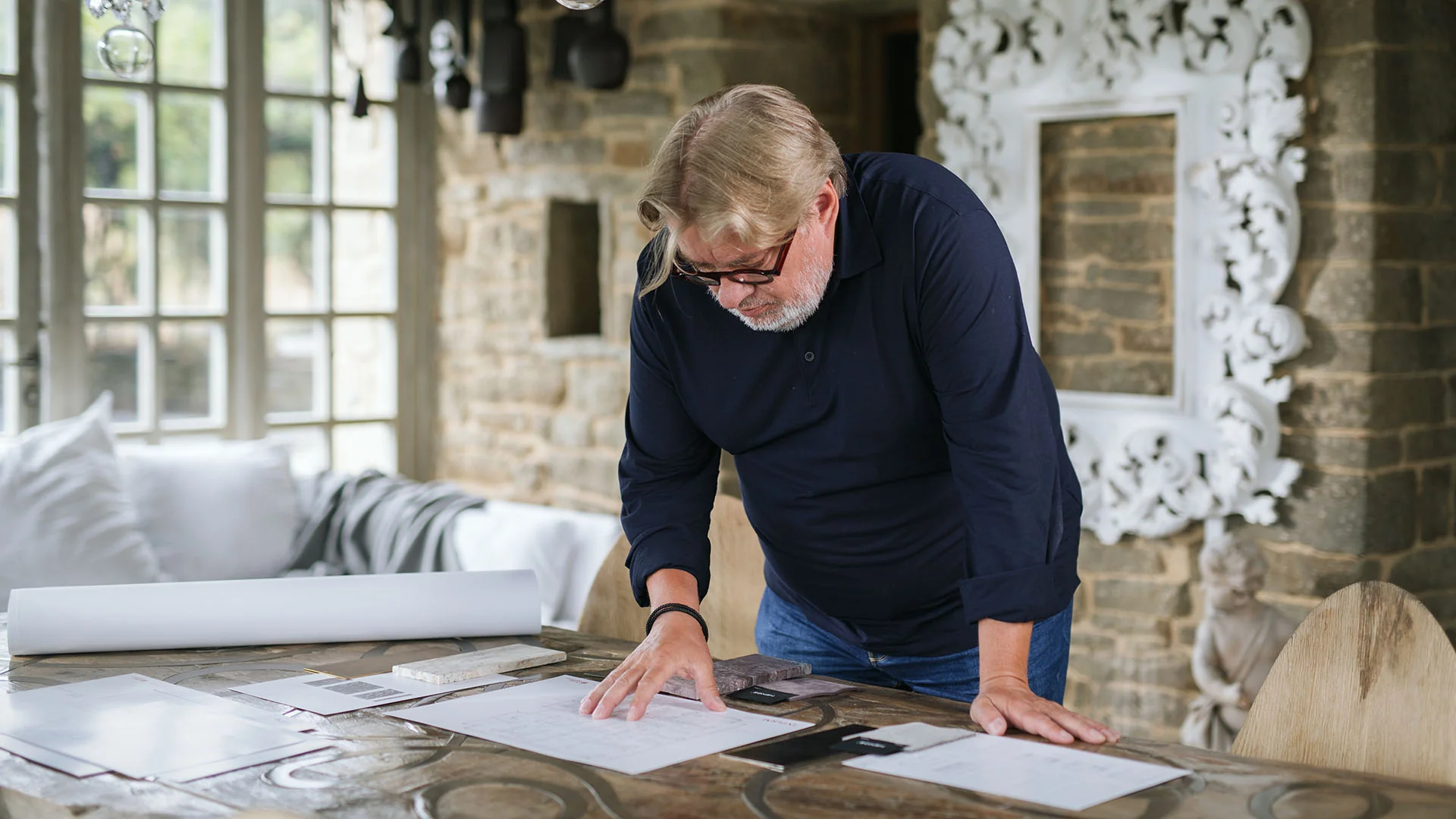
Papildomas redakcinis kadras iš tos pa?ios Interni publikacijos — visi k?riniai šiame puslapyje iš tos pa?ios medžiagos serijos.
Interni · View on INTERNI.it
Signature edition — Penthouse project · chapter 1 · Architect Rolandas Kliu?inskas
Selected questions from the conversation with Interni—on practice, projects, travel, and partnership.
The guiding theme in my work is always shaped by my clients' expectations and dreams, both explicit and implicit. These aspirations unlock possibilities and breathe life into spaces and stories.
Work in Almaty and Zermatt: two apartments in the same building with different moods, supported by Interni and leading Italian brands; and a Zermatt chalet blending English interior character with Swiss chalet craft.


Architecture and culture are interdependent. Working across the EU and Asia has shaped how I approach comfort, status, climate, engineering, and craft at every scale.
Interni helps curate Italian furnishings, materials, and makers from early concept through installation—showroom visits and samples make decisions faster and outcomes stronger.
Technology, selection, language, and what comes next—still in the architect's own words.
Today, design extends well beyond physical objects, embracing artificial intelligence, design thinking, the Internet of Things and much more. How do you integrate technology into your projects and what impact has it had on your way of working?
The Internet, AI, technology and the vast array of materials are all part of my palette, which is generally limitless. I prefer the philosophy of "more is more". In today's world, industrial influence is ubiquitous, imposing restrictions on our daily lives. Everything depends on how we utilise new technologies while preserving the benefits of customisation and craftsmanship to create unique design elements. I welcome new tools with open arms.
How does your decision-making process develop when choosing the main design pieces for your projects? What criteria do you use to ensure that each element integrates perfectly into the overall context?
A project is the evolution of a specific story, developing from the initial idea to its realisation. Interaction with the client begins when selecting architectural solutions, materials and technological scenarios. This creates a tailored palette for each individual project. The palette forms the common language between client and architect.
A word or term that you think is overused in your field?
Modern. It's impossible to encapsulate the language of architecture in a single word.
What are your future projects and plans? Are there any particular trends or innovations in the field of design that especially attract you?
We live in a fascinating era. New technologies offer us almost limitless opportunities, and the challenge lies in being creative enough to utilise them. What was considered "standard" just five years ago now seems outdated, primarily due to new technological advancements. Moreover, not only technology solutions are significantly altering project briefs. The "cocktail" of future living is still being formulated, but its ingredients are already present.
Source: Interni Journal, February 2024. English text as published; lightly edited for spelling and clarity.
https://www.internionline.it/en-at/blogs/journal/talk-rolandas-kliucinksas